“Two Missing Children, Two Different Fates: Ben Needham’s Mother Demands Answers on Why Madeleine McCann Received Millions While Her Son Was Forgotten”
In the world of missing children cases, few names are as widely known as Madeleine McCann. Her disappearance in Portugal in 2007 sparked one of the largest and most expensive police investigations in history, with millions poured into the search, international headlines spanning years, and global political pressure placed on authorities.
But for Kerry Needham, mother of missing boy Ben Needham, those headlines sting. Her son vanished on the Greek island of Kos back in 1991 — sixteen years before Madeleine — and yet, she says, the response was heartbreakingly different. While Madeleine’s case received over £13 million in UK government funding through Operation Grange alone, plus millions more in private donations, Ben’s search has scraped by on a fraction of that support. Kerry has repeatedly voiced her pain and frustration, calling the disparity “unfair” and insisting no missing child should be deemed more important than another. In recent interviews and statements, she has demanded answers: why did one toddler’s vanishing mobilize the world, while another’s faded into near-oblivion?

The contrast is stark, painful, and impossible to ignore. Madeleine McCann, a bright-eyed three-year-old from Rothley, Leicestershire, disappeared from her family’s holiday apartment in Praia da Luz on the evening of May 3, 2007. Her parents, Kate and Gerry McCann, had left her and her younger twin siblings asleep while dining with friends at a nearby tapas restaurant — a decision that would haunt them forever. When Kate checked on the children shortly before 10 p.m., Madeleine’s bed was empty. The window shutter was jemmied open. Panic ensued. Within hours, the alarm spread across the Algarve resort. Portuguese police launched a massive search, but early missteps — delayed border alerts, contaminated crime scene — allowed precious time to slip away.
The story exploded globally. Madeleine’s photo — that iconic image of a smiling girl with a distinctive coloboma in her right eye — appeared on every front page, every news bulletin. The McCanns, both doctors, became household names. They launched Madeleine’s Fund: Leaving No Stone Unturned, which raised millions from public donations, celebrity endorsements, and media settlements. When the Metropolitan Police opened Operation Grange in 2011 amid criticism of the Portuguese inquiry, funding flowed. By 2025-26, the total taxpayer cost exceeded £13.2 million, with annual extensions — most recently £108,000 approved in 2025 — keeping detectives on the case. Searches in the Algarve scrubland, forensic reviews, international cooperation with German authorities targeting suspect Christian Brueckner — all backed by significant resources.
Ben Needham’s story could not be more different. On July 24, 1991, 21-month-old Ben was playing outside a remote farmhouse in Iraklis, Kos, where his British family was renovating. His grandparents were nearby; his mother Kerry, then 19, had stepped inside briefly. In those fleeting moments, Ben vanished. No scream, no witnesses, no trace. A frantic search of the rugged terrain turned up nothing. Greek police initially treated it as a possible accident — perhaps a fall into a well or abduction by gypsies, a theory that persists. But the response was slow, disorganized. The British Embassy offered limited help. No massive manhunt followed. No international task force. No multimillion-pound fund.
Kerry Needham, now in her 50s, has spent 35 years fighting for her son. She has spoken openly about the agony of watching Madeleine’s case unfold with resources Ben never received. In a 2024 interview, she begged the UK government to match the funding for Madeleine’s search. “No missing child should be more important than another,” she said, her voice trembling with emotion. She pointed to the £1 million eventually allocated to Ben’s case in later years — a drop compared to Madeleine’s millions — and called it “insulting” that help came so late and so sparingly. “A lot of mistakes were made in the beginning,” she reflected. “There was a lack of help from the British Embassy in Athens and the British Government. After Madeleine disappeared, all the help and resources were put into her case.”
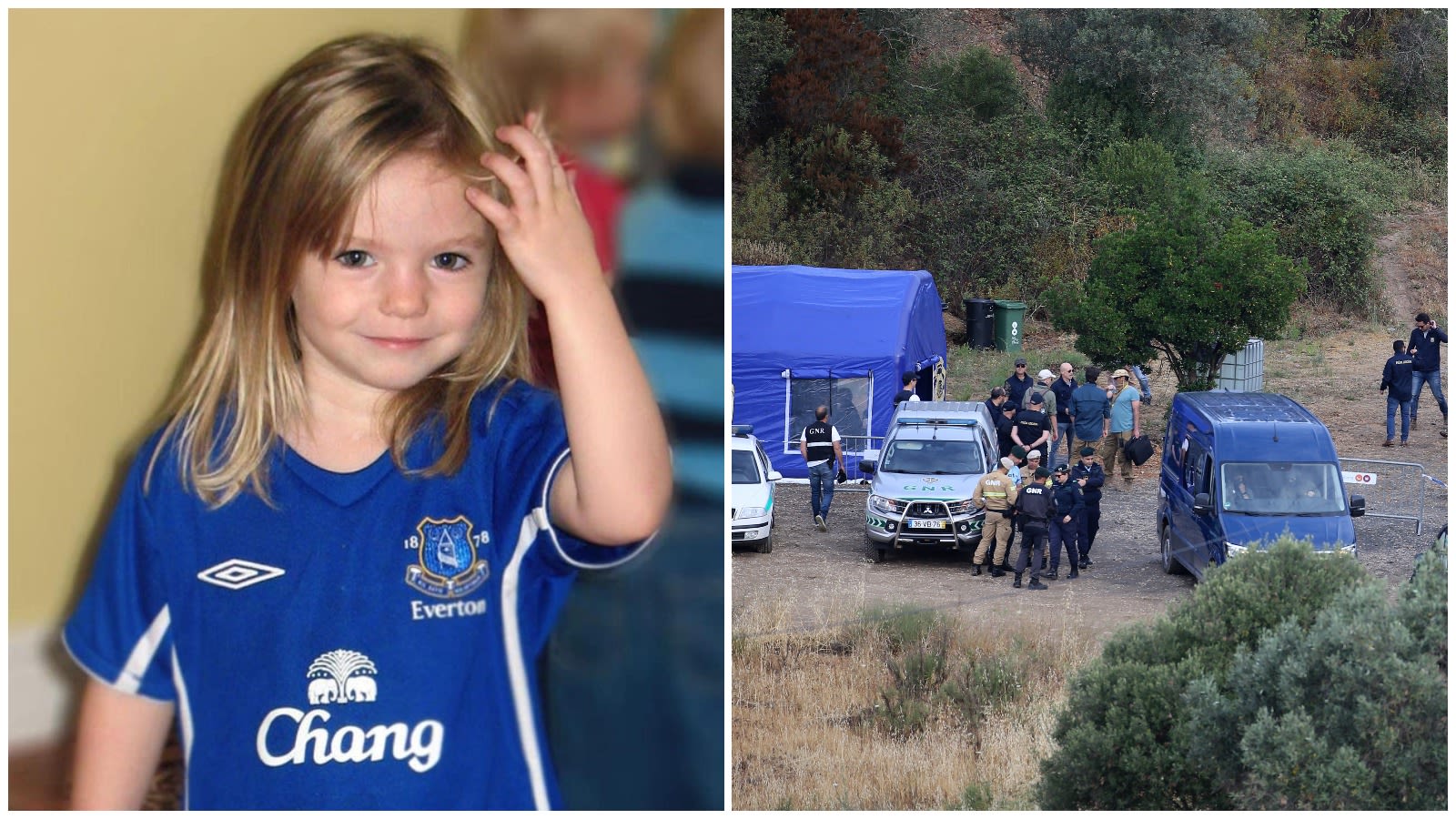
The disparity fuels deep resentment. Madeleine’s parents were middle-class professionals with media savvy; they hired private detectives, launched a website that drew 58 million hits in days, and secured high-profile support. Ben’s family, working-class from Sheffield, lacked those connections. Early coverage was minimal. Sightings were investigated sporadically. Theories — trafficking by Roma gypsies, an accident covered up by builders — lingered without resolution. South Yorkshire Police took over the British side, but funding remained modest. A £7,500 reward offered by the family pales against Madeleine’s fund.
Kerry has never blamed the McCanns personally. “I’m not being offhand with the McCanns, they deserve the help as much as I do,” she said in a recent Sun interview. “It just seems help wasn’t readily available for me in the beginning or throughout.” Yet the contrast hurts. In 2018, she broke down on television after another funding extension for Operation Grange, lamenting that Ben had been “forgotten.” She has appeared on Loose Women and other shows, tearfully wishing for the same spotlight. “It’s unfair that so much has been spent on Maddie — but not on other missing children,” she told Closer magazine.
Recent developments in Ben’s case highlight the ongoing struggle. In January 2026, a man contacted Kerry claiming he might be Ben, prompting DNA testing by South Yorkshire Police. Kerry forwarded emails detailing coincidences in the man’s background. While previous leads — a boy seen on a Corfu beach, bones found in Kos — proved negative, hope flickers. Kerry believes Ben was trafficked for illegal adoption, a fate common in 1990s Greece. She clings to the possibility he is alive, now in his mid-30s.
Madeleine’s case, meanwhile, presses on. German prosecutors insist Brueckner killed her, though no charges relate directly. Searches continue. Funding persists. The McCanns mark anniversaries with quiet dignity, their fund still active.
Kerry’s demands cut to the heart of inequality in missing children cases. Why do some receive global attention while others fade? Factors include timing (Madeleine vanished in the social media era), location (EU holiday resort vs. remote Greek island), parental profile, and media interest. But for Kerry, it’s personal. Ben’s disappearance shattered her youth; she raised other children amid grief. She campaigns relentlessly, maintaining a Facebook page “Help Find Ben Needham” and a website for updates.
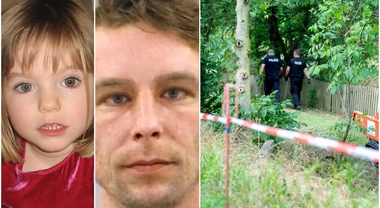
The two cases illustrate broader truths. Missing children investigations depend on public pressure, political will, and resources. Madeleine’s generated immense sympathy; Ben’s did not — at least not on the same scale. Kerry asks why. Is it class? Nationality? Media bias? She points to other forgotten cases: Lee Boxell, Martin Allen — families left to fundraise alone.
As Madeleine approaches 19 years missing and Ben nears 35, Kerry’s voice grows urgent. In 2025 posts and interviews, she reiterated: “It’s so unfair on Ben’s family and all other families of lost children.” She calls for equity: equal resources, equal attention, equal hope.
No parent should choose between children in the public eye. Yet the fates differ dramatically. Madeleine’s face remains iconic; Ben’s is known mainly to those who follow long-term mysteries. Kerry Needham refuses silence. She demands answers, not just for Ben, but for every forgotten child.
The world may never fully reconcile the disparity. But in Kerry’s words, the pain is clear: one case became a global cause; the other, a private heartbreak. Until resources match need — regardless of headlines — the injustice lingers. Two children. Two mothers. Two fates. And one burning question: why?