More than sixteen years after the disappearance of Madeleine McCann, one of the most discussed and misunderstood items connected to the case remains a small, pink plush toy known as the “Cuddle Cat.” The stuffed animal, carried constantly by Kate McCann in the days and weeks after her daughter vanished, became a symbol of maternal grief — and, later, a point of unexpected forensic interest.
As speculation spread, the toy transitioned from a heartbreaking image on front pages to a subject of intense debate. But what do the official reports actually state, and how much of the public story was shaped by headlines rather than evidence?
According to Portuguese police case files released years after the initial investigation, the Cuddle Cat was among several items collected for forensic analysis as authorities searched for clues that might help reconstruct Madeleine’s final hours in the Praia da Luz apartment.
The decision to test the toy was driven not by suspicion but by procedure: investigators routinely examine objects frequently touched by the missing child, hoping to find traces that could confirm movement, contact, or environmental exposure. The toy, carried by Madeleine regularly, was considered an appropriate sample.
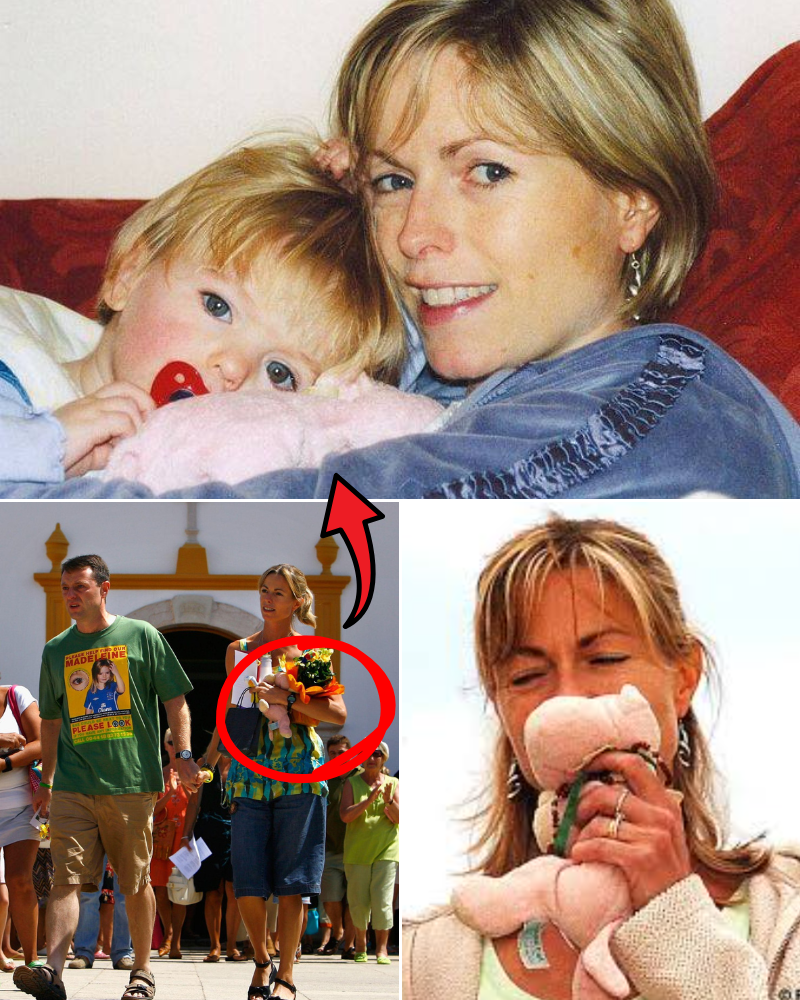
However, as the case attracted unprecedented media attention, the presence of the Cuddle Cat in police reports fueled speculation far beyond the forensic realities. Headlines circulated suggesting the toy contained “key DNA evidence” or that it was “a major breakthrough” in the investigation. In reality, the official documentation paints a different picture.
Forensic testing revealed no conclusive biological traces capable of confirming a crime, linking a suspect, or reconstructing the moment of Madeleine’s disappearance. The results were consistent with a child’s well-loved toy — handled often, washed occasionally, and exposed to multiple environments.
The disconnect between the sober technical findings and the sensational media framing created a narrative gap that still persists today. Analysts reviewing the case note that the Cuddle Cat became a “symbolic object,” allowing speculation to flourish even though the testing itself did not support dramatic conclusions.
While the toy was mentioned in reports, it was never cited as decisive evidence, nor did police suggest it held answers capable of solving the case. Instead, it served as one of many routine samples collected during the early investigative period.
The public’s fixation on the Cuddle Cat also reflects a broader pattern in high-profile cases: emotional artifacts often become lightning rods for speculation. Photographs of Kate McCann holding the toy were widely circulated, intensifying scrutiny around her behavior and fueling narratives that veered far from the boundaries of the police investigation.
Behavioral experts later argued that such attention — focusing on a grieving parent’s every gesture — risked overshadowing the factual portions of the case file. The toy’s prominence in public perception said less about forensic science and more about the powerful images that shaped early media coverage.
Meanwhile, official reports from both Portuguese investigators and later British reviews conclude that the Cuddle Cat offered no breakthrough, no incriminating evidence, and no direct indication of what happened to Madeleine.
Its primary value remained symbolic — a visual representation of loss rather than a forensic roadmap. Yet its presence in public imagination, amplified by years of documentaries, commentary, and online theories, has kept the toy entangled in the mythology surrounding one of the world’s most scrutinized missing-child cases.
The most striking aspect is how a simple pink toy became a battleground between hard evidence and public narrative. The police files present a restrained, procedural account, while the media environment transformed the Cuddle Cat into a mysterious clue.
In reality, the forensic analysis was limited, yielding no definitive results and offering no new direction for investigators to pursue. The Cuddle Cat remains important in memory, but not in the evidentiary sense many once assumed.
As the Madeleine McCann case continues to evolve with new leads and international cooperation, the Cuddle Cat serves as a reminder of how easily public perception can diverge from official findings. The enduring fascination with this small, pink toy underscores how powerful symbols can overshadow sober investigative facts — and how, in the absence of answers, objects can take on lives of their own.