The renowned heart specialist breaks down why elite fitness couldn’t protect the 22-time Grand Slam champion from a lethal hereditary threat—and how his wife Natasha’s split-second reaction saved him from his family’s tragic destiny
To millions of Australian households, Todd Woodbridge has long stood as the pinnacle of physical discipline, athletic brilliance, and lifelong fitness.
From his legendary 22 Grand Slam doubles titles to his modern role as the charismatic host of Nine’s Tipping Point Australia, the 55-year-old tennis icon spent decades prioritizing his health, working out daily, eating clean, and pushing his body to elite limits.
Yet, on a cool morning in October 2022, inside the gym of his Melbourne home, a sudden, terrifying biological shock wave brought the sports star to his knees.
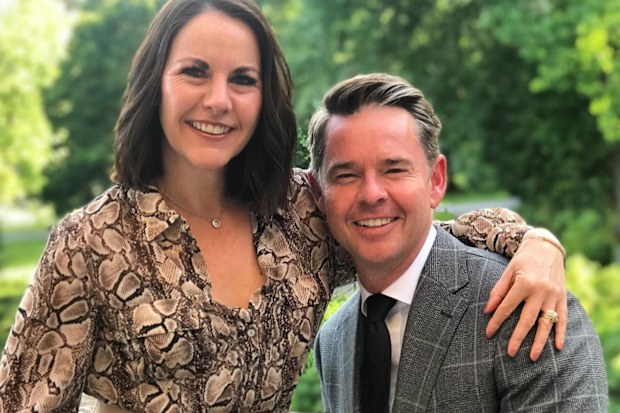
What began as a strange sensation—feeling as if a single finger were being pressed hard into the center of his chest—rapidly escalated into a crushing, heavy weight accompanied by shortness of breath, cold sweats, and overwhelming nausea.
As his terrified wife of three decades, Natasha, frantically drove her pale, sweating husband to the emergency ward, she found herself repeating a desperate, tearful mantra:
“You are not leaving me now! No, no, you are not going anywhere!”
While emergency doctors stabilized the tennis legend and confirmed he had suffered a sudden, acute heart attack at just 51, the public was left in utter disbelief: how could one of the fittest professional athletes in Australian history come so close to death?
Now, distinguished Australian cardiologist and preventive heart specialist Dr Ross Walker has broken his silence to expose the dark, genetic reality behind Woodbridge’s medical emergency—labeling it a textbook case of a silent family curse.
“FITNESS DOES NOT NEUTRALIZE GENETICS”: DR ROSS WALKER BREAKS DOWN THE TOXIC TRAP
Dr Ross Walker, one of Australia’s most prominent media cardiologists and a leading expert in preventive cardiovascular medicine, explains that the public harbors a dangerous misconception about fitness and heart disease.
While regular exercise strengthens the heart muscle and improves lung capacity, it provides zero immunity against severe hereditary risk factors lurking inside the bloodstream.
Unknown to many fans, Woodbridge was carrying a devastating family medical history: both of his brothers tragically passed away in their 50s, while both his mother and father suffered from severe cardiovascular disease requiring surgical stents.
Furthermore, his father battled hypercholesterolemia—extremely high familial cholesterol.
“What Todd experienced was the frightening reality of familial hypercholesterolemia—a biological condition that functions like a silent family curse,” Dr Ross Walker reveals.
“You can run marathons, win 22 Grand Slams, eat clean, and possess zero body fat, but you cannot out-train your DNA.
When you carry a strong genetic predisposition for high cholesterol, lethal arterial plaque quietly builds up inside the coronary arteries over decades, completely unnoticed.
Todd’s fitness actually masked the danger. His heart was so strong that it compensated for the blockages until the arterial wall finally ruptured, triggering a sudden, life-threatening event.”
THE CRITICAL WINDOW: NATASHA’S SPLIT-SECOND INSTINCT SAVED HIS LIFE
Recalling that harrowing drive to the hospital, Natasha later confessed that watching her husband in excruciating physical distress was the single hardest moment of her life.
Having met as teenagers and built a 31-year marriage alongside their two children, Zara and Beau, the prospect of losing Todd in his prime was unbearable.
Dr Ross Walker emphasizes that Natasha’s immediate decision to drive him straight to emergency, rather than waiting for symptoms to pass or rationalizing it as a gym strain, ultimately saved the champion’s life.
“In cardiovascular emergencies, time is muscle,” Dr Ross Walker explains with urgency.
“Many elite athletes fall into the psychological trap of denial when they feel chest discomfort. They tell themselves, ‘I’m fit, I ate well today, it’s just a pulled pectoral muscle or indigestion.’
That delay in seeking treatment is precisely why so many healthy-looking men in their 50s don’t survive their first heart attack.
Natasha’s sharp intuition and instant action got Todd into the hands of cardiologists before catastrophic, irreversible heart muscle necrosis could take place.”
“DON’T PUT OFF THE TEST”: TODD’S VITAL WARNING TO ALL AUSTRALIANS
Following intensive medical monitoring, blood panels, and cardiac imaging, doctors confirmed that Woodbridge’s cholesterol levels were dangerously elevated—a direct inheritance of his familial genetics that he had delayed treating in the years leading up to the crisis.
Without needing open-heart surgery, Woodbridge was placed on strict cholesterol-lowering medication and rigorous long-term cardiovascular monitoring.
The ordeal served as a massive, life-altering wake-up call for the broadcast star, prompting him to publicly urge everyday Australians—especially those with a history of heart disease in their family—not to ignore routine checkups.
“It’s been a wake-up call to me to make sure I look after myself. If it can happen to me, it shows that it can happen to anybody,” Todd bravely shared after his diagnosis.
“The message is don’t put off what you’ve been saying you’ll do. A day becomes a week, which becomes a month, then six months, and before you know it, a year has gone by, and you haven’t done what you need to do for your health.”
A RENEWED APPRECIATION FOR LIFE AND LOVE
Today, four years after staring down his family’s silent curse, Todd Woodbridge remains in peak health, actively monitored by specialists while balancing his high-profile broadcasting commitments and quiet family life in Melbourne.
For Natasha, the trauma of that 2022 emergency has transformed into a profound, daily gratitude for the decades they have shared together.
Reflecting on their journey, Dr Ross Walker stresses that the ultimate takeaway from Todd’s ordeal is simple: awareness beats genetics.
“Todd Woodbridge was given a second chance that both of his late brothers sadly never got,” Dr Ross Walker reflects warmly.
“His story proves that knowing your family history and getting your cholesterol checked isn’t just routine medical advice—it is literally a matter of life and death.
He conquered the tennis court for decades, but managing his heart health with discipline is the most important victory of his life.”