Unseen Steve Irwin Archive Reveals Uncanny Resemblance to Son Robert
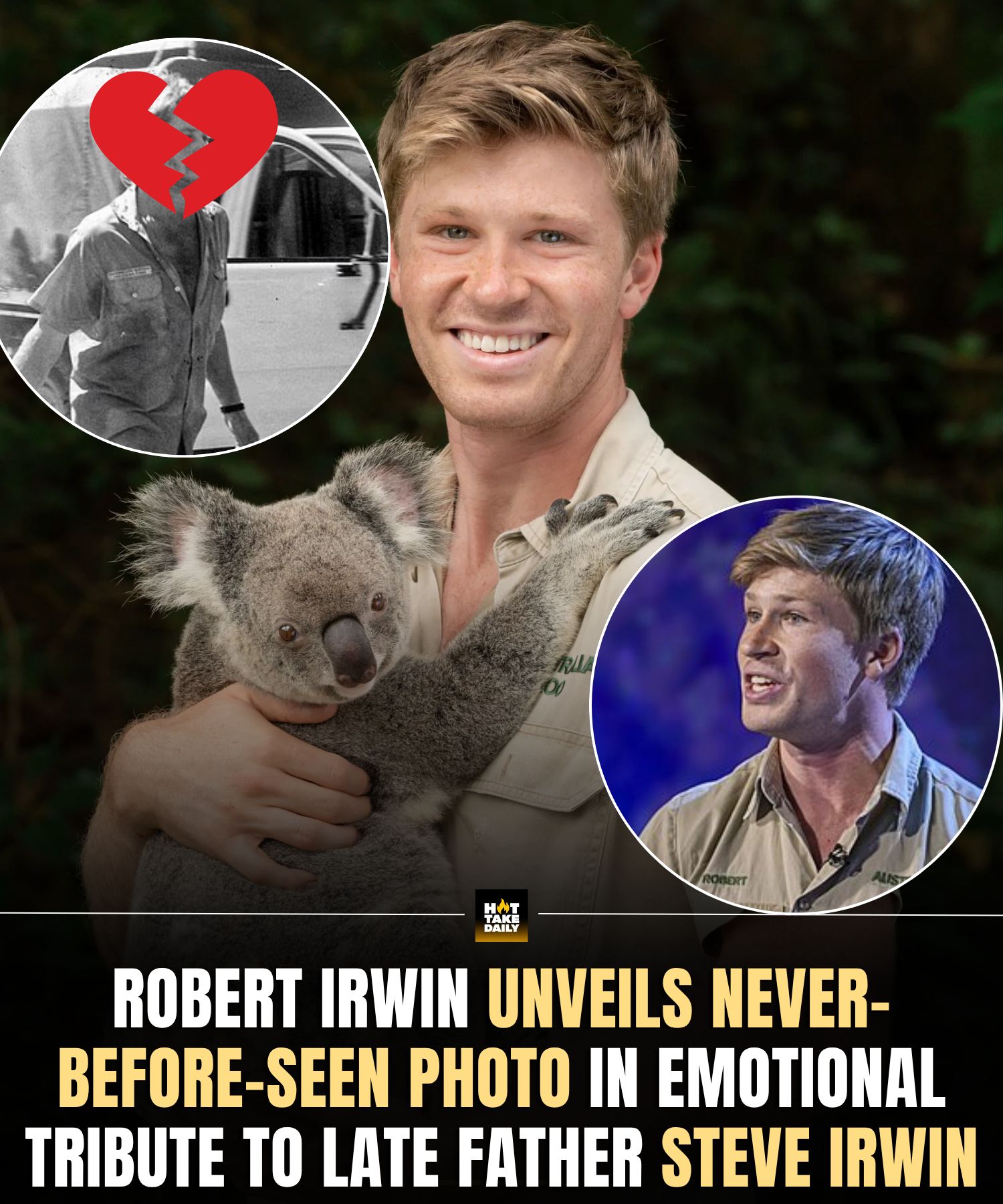
Rare photographs documenting wildlife conservationist Steve Irwin during a remote crocodile capture in North Queensland have emerged online, revealing a portrait that bears an astonishing physical resemblance to his son, Robert Irwin.
The monochrome series, published by regional studio Rellie May Photography to coincide with the twentieth anniversary of Irwin’s passing, dates back to 1989.
Captured at the junction of the Burdekin and Bogie rivers near Dalbeg, the images show a 27-year-old Irwin in the rugged terrain of northern Australia. Sporting a mullet hairstyle, coated in riverbed mud, and dressed in his trademark utilitarian work shorts and shirt, Irwin is captured securing a massive local crocodile dubbed “Bogie.”
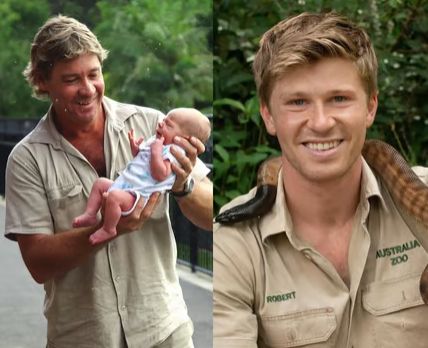
The raw imagery presents a striking parallel to contemporary portraits of his 22-year-old son, Robert, whose appearance, expression, and public conservation work closely mirror his father’s early adulthood.
The timing of the photographic release coincided with reflections from the Irwin family, marking two decades since Steve Irwin’s passing in September 2006.
Terri Irwin shared a retrospective message acknowledging the ongoing impact of her husband’s legacy across Australia and worldwide, detailing the persistence of grief alongside deep gratitude for the foundational conservation programs established during his lifetime.
The public response to the 1989 archive highlights how deeply the naturalist’s energetic spirit remains embedded in contemporary culture.
The Burdekin River Expedition


Throwback photos of Steve Irwin have resurfaced, showing the late great crocodile hunter in 1989 looking the spitting image of his son Robert, 22
The archival images document an era predating international television contracts, global merchandising, and commercial productions.
In late 1980s North Queensland, crocodile tracking was an arduous, boots-on-the-ground endeavour carried out alongside local communities.
According to the original notes accompanying the photographs, residents from nearby Ayr had travelled toward the Burdekin waterways after reports circulated of an elusive, exceptionally large reptile inhabiting the river system.
During this period, crocodile sightings of that magnitude were relatively uncommon in populated agricultural corridors. Irwin, then establishing himself as a determined and knowledgeable wildlife handler, worked directly with Dalbeg locals to safely manage and relocate the animal.
Beyond the field operation itself, the photographer documented Irwin mingling with community members at the Dalbeg Inn, recounting an evening where the young naturalist successfully defused a heated local disagreement using charm, wit, and communication skills.
The visual record captures Irwin in an unvarnished state: holding a cigarette, navigating muddy banks, and employing hands-on restraining techniques.
Observers immediately drew connections to current footage of Robert Irwin, who frequently conducts comparable wildlife relocations across Queensland’s wilderness corridors.
The facial bone structure, broad smile, expressive brow, and relaxed posture in front of dangerous fauna are nearly identical between the father at 27 and the son at 22.
Generational Continuation at Australia Zoo

Images shared by Rellie May Photography last Friday show the wildlife conservationist catching a crocodile in Dalbeg North Queensland when he was 27
The physical parallels between Steve and Robert Irwin reflect a broader operational continuation within the family. Following Irwin’s death at age 44 during a maritime documentary expedition at Batt Reef, stewardship of the family’s global enterprise fell to Terri, alongside their young children, Bindi and Robert.
Over the ensuing two decades, the operation expanded from a regional wildlife preserve into a globally recognised conservation powerhouse.
Robert Irwin has transitioned from childhood appearances into a prominent international broadcaster, nature photographer, and front-line wildlife rescuer.
His work behind the lens has earned him widespread acclaim, while his television presence has introduced a new generation to Australian fauna.
For long-time followers of the family, the discovery of the 1989 Dalbeg photographs provides historical confirmation that Robert’s media presence is not a curated construct, but a natural inheritance of his father’s foundational traits.
Alongside Robert, Bindi Irwin and her husband, Chandler Powell, remain active administrators within Australia Zoo, while Terri continues to guide overarching operational strategy.
The family’s non-profit foundation, Wildlife Warriors Worldwide, funds anti-poaching initiatives, habitat preservation drives, and rescue hospitals across multiple continents, sustaining initiatives that began as modest regional rescue calls in Queensland decades ago.
Navigating Public Scrutiny and Speculation

Steve died on September 4, 2006 in a freak accident caused by an unpredictable encounter with a large stingray. He was just 44. Pictured with son Robert
The enduring popularity of the Irwin family has generated sustained media scrutiny, particularly surrounding Terri Irwin’s personal life following the loss of her husband.
Over the past twenty years, international tabloids have repeatedly linked her to high-profile Australian personalities, including actor Russell Crowe, veteran television presenter Richard Wilkins, and entertainer Paul Hogan.
Terri has consistently addressed these recurring narratives with professional clarity, reaffirming that her focus remains dedicated to her family and wildlife initiatives.
Speaking on multiple occasions regarding the ongoing public interest, she has emphasised that her personal bond with Steve was unique and complete, dismissing romantic speculation while acknowledging close, long-standing friendships with figures such as Crowe, who maintained ties with the family following Steve’s passing.
This steady adherence to privacy and professional purpose has allowed the Irwin family to retain substantial goodwill across both Australian and international media markets, avoiding the standard controversies that often accompany sustained celebrity status.
A Measured Retrospective
Two decades after Steve Irwin transformed international nature television with his distinctive enthusiasm and hands-on methodology, the surfacing of historical material continues to generate global interest.
The Dalbeg river photographs do not depict a polished media personality, but a dedicated young Australian tradesman operating in challenging regional conditions long before the advent of worldwide fame.
The striking visual comparison between Steve Irwin in 1989 and Robert Irwin today serves as a tangible link between the past and present of modern wildlife media.
As historical documentation continues to emerge from private collections, it underscores a continuity of character that remains central to the family’s enduring public standing and ongoing conservation initiatives.